By UK Vape Deals
Quick Answer
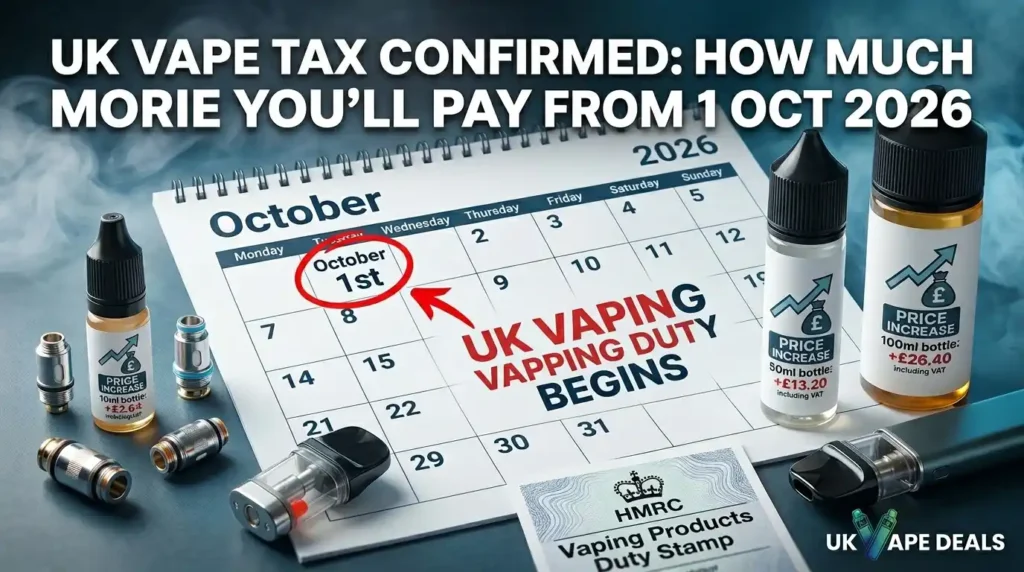
The UK Vaping Products Duty starts on 1 October 2026. This tax will apply a flat excise duty of £2.20 per 10ml of e-liquid. This duty will apply across all formats, including:
- Nic salts
- Freebase liquids
- Shortfills
- Prefilled pods
- Nicotine-free liquids
VAT at 20 per cent is applied on top, bringing the total effective increase to approximately £2.64 per 10ml. Hardware, coils and empty pods are exempt. The grace period for selling unstamped stock ends 1 April 2027.
The UK vaping tax is confirmed legislation taking effect on 1 October 2026. It will increase the cost of e-liquid for every UK vaper, regardless of which format they use. This guide covers exactly how much more you will pay and which products are affected. We’ll also break down what is exempt, the HMRC compliance timeline, and what you can do now to reduce the impact.
UK Vape Deals recommendation: if you are a regular vaper, stock up on your preferred e-liquids before 1 October 2026.
What Is the UK Vape Tax? The Vaping Products Duty Explained Simply
The Vaping Products Duty is a new excise tax applying to e-liquid sold in the UK from 1 October 2026. It is structured as a flat-rate duty of £2.20 per 10ml of e-liquid, equivalent to 22 pence per ml. VAT at 20 per cent is then applied on top of the retail price inclusive of duty, bringing the effective total increase per 10ml to approximately £2.64.
The stated purpose of the tax is to generate revenue and discourage vaping uptake, particularly among younger people.
However, the government also aims to maintain vaping as a cheaper alternative to cigarettes. This is because cigarettes carry a significantly higher duty.
UK Vape Tax: Which Products Are Taxed and Which Are Exempt?
The duty will apply to all e-liquids containing nicotine, no matter the format. This includes:
- 10ml bottles
- Vaping hardware
- Replacement coils
- Empty pods and cartridges
- Tanks and accessories
- Licensed medical vaping products
- Prefilled pods
- Shortfill bottles
- Nic shots
- Bar salts
Nicotine-free e-liquids, like 0mg shortfills and 0mg pod liquids, will also be subject to the tax.
The cost increase is entirely concentrated on the consumable e-liquid component. The device itself attracts no new duty. This means switching to a more liquid-efficient device is one of the most direct ways to manage the tax impact over time.
UK Vape Tax 2026: How Much More Will Each Product Cost?
The numbers below show the duty, VAT impact and approximate post-tax prices for the most common e-liquid formats used by UK vapers.
10ml nic salt or freebase e-liquid bottle: duty added £2.20, total effective increase approximately £2.64. A bottle currently priced at £4 will rise to approximately £6.64.
2ml prefilled pod: duty added £0.44, total effective increase approximately £0.53 per pod. Modest in isolation, but adds up for daily users.
50ml shortfill bottle: duty added £11.00, total effective increase approximately £13.20. A 50ml shortfill currently priced at £10 to £12 will rise significantly.
100ml shortfill bottle: duty added £22.00, total effective increase approximately £26.40. A 100ml shortfill currently priced at £15 to £20 will more than double in effective consumer cost.
Nic shots at 10ml: subject to the same £2.20 duty per 10ml as other liquids.
| Product |
Price Today |
Approx. Price After Tax |
| 10ml Nic Salt |
£4 |
£6.64 |
| 2ml Prefilled Pod |
£2 |
£2.53 |
| 50ml Shortfill |
£11 |
£24 |
| 100ml Shortfill |
£17 |
£43 |
The impact on shortfill users is the most severe in absolute terms. The impact on prefilled pod users is the most modest per unit, though it still accumulates meaningfully over a month of regular use.
How Much Will the UK Vape Tax Cost You Per Month?
Monthly projections based on e-liquid consumption at confirmed duty and VAT rates.
- Light vaper using approximately 30ml per month: Extra duty and VAT approximately £7.92 per month.
- Moderate vaper using approximately 60ml per month: Extra duty and VAT approximately £15.84 per month.
- This is approximately £190 per year.
- This is approximately £95 per year.
Heavy shortfill user going through 100ml per week:
- Duty on 400ml per month: £88
- Annual duty alone: approximately £1,056
- With VAT, the annual impact is considerably higher.
Heavy shortfill user going through 100ml per week:
- Duty on 400ml per month: £88
- Annual duty alone: approximately £1,056
- With VAT, the annual impact is considerably higher.
These projections assume the duty passes fully to the consumer at the retail level, which is the expected outcome. The increases are much higher for heavy vapers.
UK Vape Tax Key Dates: What Happens and When
1 April 2026: registration deadline for manufacturers and importers. * All manufacturers and importers of e-liquid products sold in the UK must register with HMRC.
- This is to get approval to operate under the new Vaping Products Duty regime.
- The deadline for this application is 1 April 2026.
1 October 2026: duty takes effect. From this date, all new e-liquid stock entering the UK supply chain must carry a duty stamp confirming the duty has been paid. Products placed on sale after this date without a duty stamp are non-compliant.
1 April 2027: grace period ends. Retailers are permitted to sell existing unstamped stock purchased before 1 October 2026 until this date. After 1 April 2027, selling unstamped e-liquid stock becomes a criminal offence.
For consumers, the grace period means some pre-tax stock may remain available at lower prices. This is because retailers will be clearing existing inventory between October 2026 and April 2027. This will vary by retailer and stock levels.
How to Reduce the Impact of the UK Vape Tax: Practical Strategies
Stock up before 1 October 2026: e-liquid purchased before the duty takes effect will not carry the new charge. Buying a supply of your preferred e-liquids before October 2026 is the most immediate way to delay the cost impact. E-liquid stored correctly in a cool, dark place has a shelf life of one to two years.
Switch to higher nicotine strength to reduce volume consumed: For example, a vaper who uses a 100ml shortfill of 3mg freebase monthly could switch to a 10ml bottle of 20mg nic salt. This would provide a similar level of nicotine satisfaction while using a fraction of the liquid volume. Lower volume means lower total duty. This is one of the most effective practical strategies for high-volume vapers.
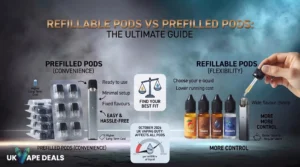
Choose refillable pod kits over prefilled pods: Refillable pods use bottled e-liquid. They remain cheaper per puff. This is true even post-tax, when compared to prefilled alternatives. The duty rate per ml is identical, but the all-in cost of refillable vaping is lower at equivalent consumption levels.
Avoid 100ml shortfills post-tax: This change will take effect after October 2026. Moving to multiple 50ml bottles or 10ml bottles changes the absolute cost per purchase without changing the per-ml duty rate.
UK Vape Tax vs Cigarette Duty: Does Vaping Still Work Out Cheaper?
Yes, significantly so. Cigarettes in the UK carry a tobacco duty of £7.02 per 20 cigarettes plus 16.5 per cent ad valorem duty. A pack-a-day smoker spends approximately £4,000 per year at prevailing prices.
Vaping will remain dramatically cheaper than smoking even after October 2026. The gap narrows but does not close. For UK vapers concerned about the tax increase, there’s no need to return to cigarettes. The financial case for staying on vapes remains overwhelming.
UK Vape Tax 2026: What It Means for Different Types of Vapers
Prefilled pod kit users: the impact is the most modest in absolute terms. A 2ml pod attracts approximately £0.53 in combined duty and VAT. At one pod every two to three days,s the monthly additional cost is approximately £5 to £8.
Refillable pod kit users on 10ml nic salts: the impact is approximately £2.64 per 10ml bottle. At two to three bottles per week,ek the monthly additional cost is approximately £21 to £32. The most effective way to reduce costs for this group is to switch to a higher nicotine concentration. This will lower the volume of liquid they consume.
Shortfill users with sub-ohm setups: this group faces the most significant impact. Heavy shortfill users going through 100ml or more per week face duty costs running into hundreds of pounds annually. Switching your device or moving to higher nicotine concentrations is strongly worth considering. This change should be made before October 2026.
Big puff kit users: the duty impact is comparable to refillable pod kit users at equivalent consumption volumes. Big puff kits are not disproportionately affected relative to other rechargeable formats.
UK Vape Tax Compliance for Retailers: Key Requirements
Retailers who import e-liquid directly must register with HMRC by 1 April 2026. All e-liquids entering the supply chain from 1 October 2026 must carry a duty stamp. Retailers purchasing from UK distributors do not manage duty stamps directly. However, they should confirm their supplier’s compliance before the October 2026 deadline.
The grace period allows unstamped stock purchased before 1 October 2026 to be sold until 1 April 2027. After this date, holding and selling unstamped e-liquid is a criminal offence. Retailers should plan their stock rotation carefully. This will help them avoid having non-compliant inventory remaining after the grace period closes.
Is the Vape Tax Fair and What Should UK Vapers Expect?
The vaping products duty will meaningfully increase the cost of vaping for all UK users,s regardless of format. The impact is most severe for heavy shortfill users and most modest for prefilled pod users. Applying the duty to nicotine-free liquids confirms this is a product-category tax on e-liquid broadly. It is not a targeted nicotine measure.
Whether the duty rate changes beyond October 2026 will depend on future HMRC review and budget decisions. The rate of £2.20 per 10ml is confirmed for the initial implementation but is subject to future change.
UK Vape Tax 2026: Frequently Asked Questions
When does the UK vape tax start?
The Vaping Products Duty takes effect on 1 October 2026. All e-liquid entering the UK supply chain from this date must carry a duty stamp confirming the duty has been paid.
How can I reduce the impact of the vape tax?
- Stock up on your favourite e-liquids before October 2026.
- Switch to a higher nicotine strength to reduce the amount of liquid you consume.
- Consider a lower-powered pod kit that uses less e-liquid per puff.
- Choose refillable pod kits over prefilled ones for better value after the tax is implemented.
When must retailers register with HMRC for the vaping duty?
Manufacturers and importers must apply to HMRC for approval by 1 April 2026, six months before the duty takes effect.
Does the vape tax apply to prefilled pods?
Yes. The e-liquid contained within a prefilled pod is subject to the duty at £2.20 per 10ml, equivalent to approximately £0.44 per 2ml pod before VAT.
What is a vaping duty stamp?
A duty stamp is a mark applied to e-liquid packaging confirming that the Vaping Products Duty has been paid. All e-liquids placed on sale in the UK after 1 October 2026 must carry a duty stamp to be legally compliant.
Final Thoughts: What the UK Vape Tax Means for You in 2026
The UK Vaping Products Duty is the most significant change to vaping costs in the UK since the market became mainstream. This is no small change. For heavy shortfill users, the October 2026 changes represent a large increase in annual spending. This will need real planning ahead of the deadline.
The important context is that vaping will still cost a fraction of what cigarettes do, even after the duty takes effect. The tax narrows the gap between vaping and smoking costs, but it does not close it. For any smoker who has switched or is considering switching, the financial case for vaping remains strong.
UK Vape Deals will continue updating this guide as the duty implementation develops and as any changes to the rate or scope are confirmed by HMRC.
If you have questions about how the tax affects a specific product or usage pattern, our team is available to help.
Explore more from UK Vape Deals:






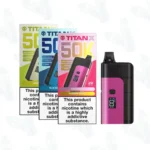 Titan X 50K Prefilled Pod Kit
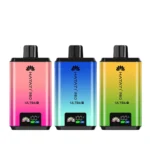 Hayati Pro Ultra Plus 25K Prefilled Pod Kit
 Al Fakher 30K Hypermax Vape Kit
 Relx Maxgo Combo 33K Prefilled Pod Kit
 RandM Fumot Tornado 18000 Puffs Vape Kit
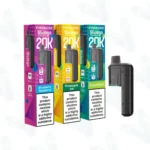 Firerose SlideGo 40K Prefilled Pod Kit
 Craving Bar Big Maxx 22k Prefilled Vape kit
 Hayati Pro Ultra Plus Shisha 30K Prefilled Pod Kit
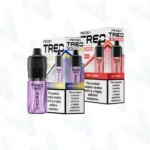 FEOBA Treo 33K Prefilled Pod Vape Kit
 Vapes Bars Angel 20K Prefilled Pod Kit