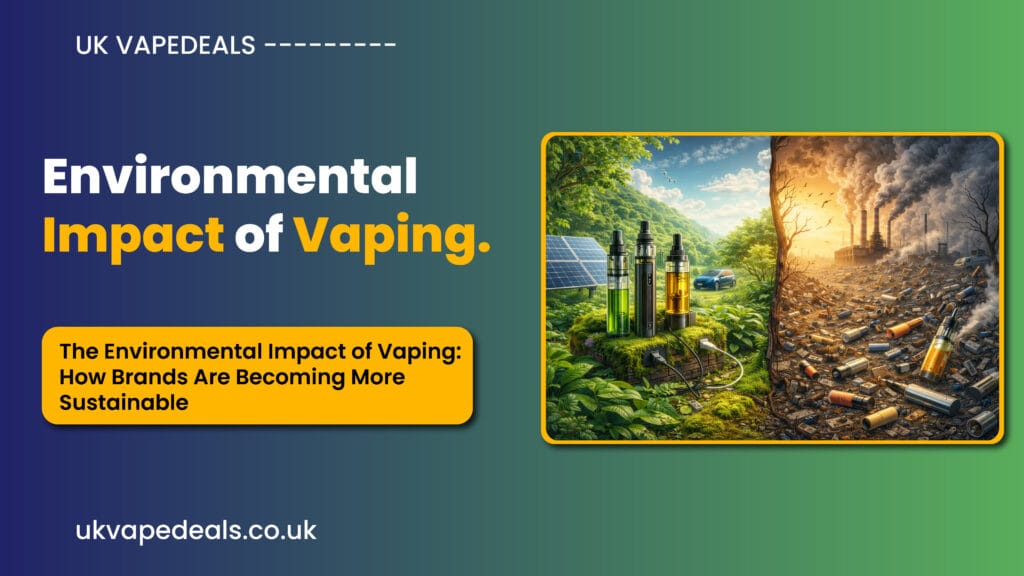
The conversation around vaping in the UK has evolved significantly over the past decade. Initially, the focus was almost entirely on public health and smoking cessation. Today, as vaping has become firmly established, attention has shifted towards another critical issue: the environmental impact of vaping.
With millions of adult vapers across the UK and continued growth in the sector, the environmental footprint of vape devices, e-liquids, packaging, and disposal practices can no longer be ignored. Regulators, manufacturers, retailers, and consumers are now being challenged to rethink how vaping products are designed, used, and disposed of.
This article explores what the environmental impacts of vaping are, why they matter in the UK, and how the vaping industry is beginning to respond through sustainability, innovation, and responsibility.
Understanding the Environmental Impact of Vaping
The environmental impact of vaping extends far beyond the act of vaping itself. It covers the entire lifecycle of a product, from raw material extraction and manufacturing, to distribution, use, and final disposal.
While vaping is widely recognised as less harmful than smoking from a health perspective, it still carries environmental costs that must be addressed to ensure long-term sustainability.
Vaping Device Production and Resource Use
Modern vaping devices rely on a range of materials, many of which have environmental consequences during extraction and processing.
Key environmental considerations include
- Lithium and cobalt used in rechargeable batteries
- Plastics derived from fossil fuels for device casings
- Electronic circuits requiring energy-intensive manufacturing
- Packaging materials including plastics, foils, and cardboard
The mining of battery materials can contribute to habitat destruction and pollution, while plastic production increases reliance on non-renewable resources. Energy use during manufacturing often relies on fossil fuels, adding to greenhouse gas emissions.
These factors contribute significantly to the overall environmental impact of vapes before they even reach consumers.
E-Liquids and Their Ecological Footprint
E-liquids are made from a combination of propylene glycol, vegetable glycerine, nicotine, and flavourings. Each component has its own environmental implications.
Vegetable glycerine and propylene glycol
These ingredients require agricultural production or petrochemical processing, both of which consume water, energy, and land. Crop cultivation for glycerine can contribute to deforestation and water depletion if not responsibly managed.
Nicotine sourcing
Nicotine is derived from tobacco plants, which require intensive farming practices. Tobacco cultivation has historically been associated with soil degradation, chemical use, and land clearing.
Flavouring compounds
Many flavourings are synthetically produced, involving chemical processes that may generate waste by-products if not tightly controlled. Together, these factors contribute to the broader environmental impacts of vaping, even when devices are refillable and reusable.
Waste Management Challenges in the Vaping Industry
One of the most pressing environmental issues facing vaping in the UK is waste management.
Electronic waste
Vape devices contain batteries and electronic components that must be treated as electrical waste. Improper disposal can lead to heavy metals leaking into soil and water systems.
Plastic pollution
Non-biodegradable plastics from devices and pods contribute to landfill buildup and long-term pollution.
Mixed material design
Many vaping products combine plastic, metal, and electronics, making recycling complex and costly.These challenges are a major reason why regulators and environmental bodies have pushed for reform across the vaping sector.
Why Disposable Vapes Became a Turning Point
Single-use vape products brought environmental concerns into sharp focus. Their rapid adoption highlighted weaknesses in waste systems and consumer behaviour. In response, UK authorities moved towards stricter regulation, reinforcing the importance of refillable and rechargeable alternatives that generate significantly less waste over time. This shift has accelerated industry-wide discussions around sustainability, responsibility, and long-term environmental planning.
The Role of UK Regulation and Environmental Policy
Environmental regulation has become a central driver of change in the vaping industry. UK authorities are reviewing how vaping products are categorised under waste and recycling legislation, particularly under electrical and electronic equipment rules. This includes stronger expectations for manufacturers and retailers to comply with recycling responsibilities. The message from regulators is clear: environmental compliance is not optional, and waiting for future enforcement is no longer acceptable.
Recycling and Disposal Solutions Emerging in the UK
The vaping industry has begun exploring practical solutions to address waste challenges.
Key approaches include
- Dedicated vape recycling points in retail stores
- Partnerships with specialist electronic waste processors
- Consumer education at point of sale
- Incentive schemes to encourage proper disposal
- Improved labelling and disposal guidance
Retailers are increasingly being recognised as an important link between manufacturers and consumers in driving responsible behaviour.
Innovation in Sustainable Vape Design
Sustainability is now influencing product design across the vaping sector.
Examples of innovation include
- Devices designed for easier disassembly and recycling
- Increased use of recyclable materials
- Reduced packaging waste
- Longer-lasting coils and components
- Rechargeable systems replacing throwaway models
Manufacturers are also investing in research to reduce the environmental footprint of both hardware and e-liquid production.
Comparing the Environmental Impact of Vaping and Smoking
Traditional cigarette smoking has long been associated with severe environmental damage, including deforestation, litter, and chemical pollution. While vaping is not environmentally neutral, it presents an opportunity to reduce harm if managed responsibly. Cigarette filters are among the most common forms of litter globally, whereas vaping’s primary challenge lies in electronic waste. The key difference is that vaping offers greater potential for improvement through design, recycling, and consumer education.
Consumer Responsibility in Reducing Environmental Impact
Consumers play a critical role in shaping the future of vaping sustainability.
Responsible choices include
- Choosing refillable and rechargeable devices
- Properly recycling batteries and electronics
- Supporting brands with sustainability commitments
- Avoiding improper disposal in household waste
- Encouraging responsible behaviour within the vaping community
As awareness grows, consumer expectations are increasingly influencing brand behaviour.
Towards a More Sustainable Vaping Culture
The environmental impact of vaping is complex, but it is not unsolvable. The industry is now at a point where growth must be balanced with responsibility. Collaboration between regulators, manufacturers, retailers, and consumers is essential to creating a vaping ecosystem that aligns public health benefits with environmental protection.
Conclusion: The Future of Sustainable Vaping in the UK
The environmental impact of vaping has become a defining issue for the industry’s future. As the UK market matures, sustainability is no longer a side discussion but a core requirement. Progress is already visible through improved regulation, recycling initiatives, product innovation, and greater consumer awareness. While challenges remain, vaping has the potential to evolve into a more environmentally responsible alternative when approached with care and accountability.
At Uk Vape Deals, staying informed about sustainability trends helps consumers make smarter choices while supporting a vaping market that prioritises both people and the planet.







 Titan X 50K Prefilled Pod Kit
 Hayati Pro Ultra Plus 25K Prefilled Vape Kit
 Al Fakher 30K Hypermax Vape Kit
 Relx Maxgo Combo 33K Prefilled Pod Kit
 RandM Fumot Tornado 18000 Puffs Vape Kit
 Firerose SlideGo 40K Prefilled Pod Kit
 Craving Bar Big Maxx 22k Prefilled Vape kit
 Hayati Pro Ultra Plus Shisha 30K Prefilled Pod Kit
 FEOBA Treo 33K Prefilled Pod Vape Kit
 Vapes Bars Angel 20K Prefilled Pod Kit